How Do You Actually Get Studying Done in a Busy Student Apartment?
How do you study in a busy student apartment? Here’s how to set up a study space, beat distractions and find quiet places to study near FSU.
How do you study in a busy student apartment?
You study in a busy student apartment by controlling where you study, when you study and what can interrupt you. Pick one spot for studying, block the time on your calendar, put your phone in another room and agree on quiet hours with your roommates. When home gets too loud, keep a quieter study space nearby as a backup.
Key takeaways
- A dedicated study space makes it easier to switch into focus mode.
- Your phone pulls at your attention even when it is silent, so keep it in another room.
- Time blocking turns “I’ll study later” into a set appointment.
- Noise-canceling headphones and white noise handle most apartment noise.
- A roommate agreement with quiet hours prevents most study-time conflicts.
- Strozier Library is open 24 hours from Sunday afternoon to Friday midnight during the semester.
- If roommate noise is a constant problem, a private studio removes it entirely.
Why Is It Hard to Focus on Studying in a Student Apartment?
It’s hard because the rooms you study in are built for living. Your kitchen, couch and bed are where you eat, relax and sleep, and over time each space gets tied to what you usually do there.
Shared apartments in Tallahassee add more to manage: roommates on different schedules, sound through shared walls and a living room that’s almost always in use. Most advice on how to not get distracted while studying starts with willpower. Changing your setup works better, because it takes the decision away.
How Do You Set Up a Study Session, Step by Step?
Most good study sessions follow the same order, whatever the subject:
Choose your spot. Use a desk instead of your bed, and use it only for work. In most student apartments, that’s the desk in your bedroom.
Pick one task. “Study bio” is too vague. “Finish the chapter 6 practice questions” gives you a clear finish line.
Put your phone in another room. If you need it for two-factor logins, turn on Focus or Do Not Disturb mode.
Signal that you’re studying. Close the door or put on headphones, and make sure your roommates know what it means.
Set a timer. Work in blocks of 25 to 50 minutes with short breaks in between.
Stop on purpose. Write down where you left off, so your next session starts faster.
If you’re wondering how to focus on studying when everything else is going on, start with the phone. In a 2017 University of Texas at Austin study of nearly 800 smartphone users, people with their phones in another room outperformed people whose phones sat on the desk, even with every phone on silent. Not every follow-up study has found the same effect, but the fix costs nothing.
How Do You Stop Getting Distracted While Studying?
You stop getting distracted while studying by matching each distraction with a specific fix instead of trying to ignore everything at once. Learning how to study without getting distracted mostly means knowing what pulls you away. Here’s what usually gets in the way in a shared apartment:
Distraction | What to do | Why it helps |
Your phone | Leave it in another room during study blocks | You stop spending effort resisting it. |
Roommates talking | Use noise-canceling headphones or white noise | Steady sound masks voices. |
TV or music in the living room | Agree on volume and quiet hours | Shared spaces belong to everyone. |
Your bed | Study at a desk | Sleep and work stay separate. |
Guests | Set guest rules for exam weeks | Exam weeks need predictable quiet. |
Hunger and errands | Prep snacks and start a “later” list first | You have fewer reasons to get up. |
Social media on your laptop | Use a website blocker during study blocks | It removes the one-click escape. |
How Do You Focus for Long Periods of Time?
Work in timed blocks with planned breaks instead of trying to push through for hours. Two methods hold up well in a shared apartment:
The Pomodoro Technique. Created by Francesco Cirillo, it pairs 25 minutes of focused work with a 5-minute break, then a longer 15- to 30-minute break after four rounds. Twenty-five minutes of quiet is also an easy thing to ask roommates for.
Time blocking. Put study sessions on your calendar like classes, each with a subject and a place. A block that says “Chem problem set, desk, 2–4 p.m.” is harder to skip than a plan to study later.
A simple weekly study schedule might look like this:
When | What | Where |
Mon and Wed, 2–4 p.m. | Problem sets and practice questions | Campus library |
Tue and Thu, 7–9 p.m. | Reading and review | Desk at home |
Sunday, 3–5 p.m. | Plan the week, review flashcards | Study room |
Schedule your hardest work for when the apartment is quietest, often late morning and early afternoon while roommates are in class.
Which Study Skills Help College Students Most?
The study skills for college students that pay off most are active ones. Rereading notes and highlighting feel productive, but they’re weaker ways to remember material. A few things help more:
Test yourself. Close your notes, write down what you remember, then check what you missed.
Space it out. Three one-hour sessions across a week beat one three-hour session the night before.
Teach it. Explaining a concept out loud to a roommate shows you what you don’t understand yet.
Mix problem types. Switching between kinds of problems is closer to how exams actually look.
Keep expectations realistic. Not every session will feel productive. Showing up at the same time and place does more for your productivity than one great night.
How Do You Study in a Noisy Environment?
Block the noise you can control and mask what’s left. A few tools cover most apartment noise:
Noise-canceling headphones work best on steady, low sounds like air conditioning, traffic and bass through the wall. They’re less effective against sudden voices.
White noise or brown noise turns an irregular sound, like a conversation next door, into a steady background you stop noticing.
Foam earplugs are cheap and work well for reading.
Music without lyrics is easier to read over than songs with words.
Moving is the last option. Some noise can’t be fixed from your desk.
How Do You Deal With Noisy Roommates?
Start with a direct conversation, then put what you agree on in writing. Most roommates aren’t trying to be loud. They just don’t know your schedule.
Keep the task short and specific: “I’ve got an exam at 9 tomorrow. Could we keep it down after 11 tonight?” A specific request is easy to say yes to.
If the same problem keeps coming back, check your lease and community rules, then talk to your leasing office. If you’re signing at The Renegade without roommates, our FAQ explains how roommate matching works.
What Should Roommates Agree On Before Finals Week?
The weeks before finals are the easiest time to set expectations, before stress builds up. A roommate agreement for studying should cover:
Quiet hours on weeknights and during finals week
How you’ll signal that you’re studying
Guests and overnight guests during exam weeks
TV and music volume in shared spaces
Everyone’s exam dates, so you know which nights need quiet
Write it down. A note in your group chat works fine.
Finals week itself goes smoother with a plan. Reserve library study rooms early, work backward from each exam date, and protect your sleep the night before a test. Strozier Library has also stayed open around the clock during recent finals weeks.
How Do You Study When You Can’t Focus?
Shrink the task and change something about your situation. Start with five minutes on the easiest piece, like one problem or one page, since getting started is often the hardest part.
Change location. A new spot can reset your attention.
Move first. A short walk or workout can clear your head.
Check the basics. Sleep, food and water affect focus more than any app.
Make a “later” list. Write down stray to-dos so they stop circling in your head.
If trouble focusing lasts for weeks and affects your grades, talk with campus academic support or a healthcare provider. Ongoing focus problems can have causes that study tips won’t fix.
Where Are the Best Quiet Places to Study Near FSU?
The best quiet places to study near FSU are the campus libraries: Strozier Library for late nights, Dirac Science Library for STEM work and the Charlotte Edwards Maguire Medical Library for daytime quiet. If you live in student apartments near FSU, all three study spots are a short walk away, so you can switch when home gets loud.
Study spot | Best for | Regular semester hours | Good to know |
Strozier Library | Late nights, group study rooms | 24 hours from noon Sunday to midnight Friday; Saturday 10 a.m.–6 p.m. | FSU’s main library, with seven floors; study rooms can be reserved online |
Dirac Science Library | STEM work, quieter evenings | Sun 1–9 p.m.; Mon–Thu 8 a.m.–1 a.m.; Fri 8 a.m.–5 p.m.; Sat 10 a.m.–6 p.m. | Smaller and often calmer than Strozier |
Charlotte Edwards Maguire Medical Library | Daytime focus | Mon–Fri 8 a.m.–5 p.m. | In the FSU College of Medicine; after-hours access is for medical and some health-program students |
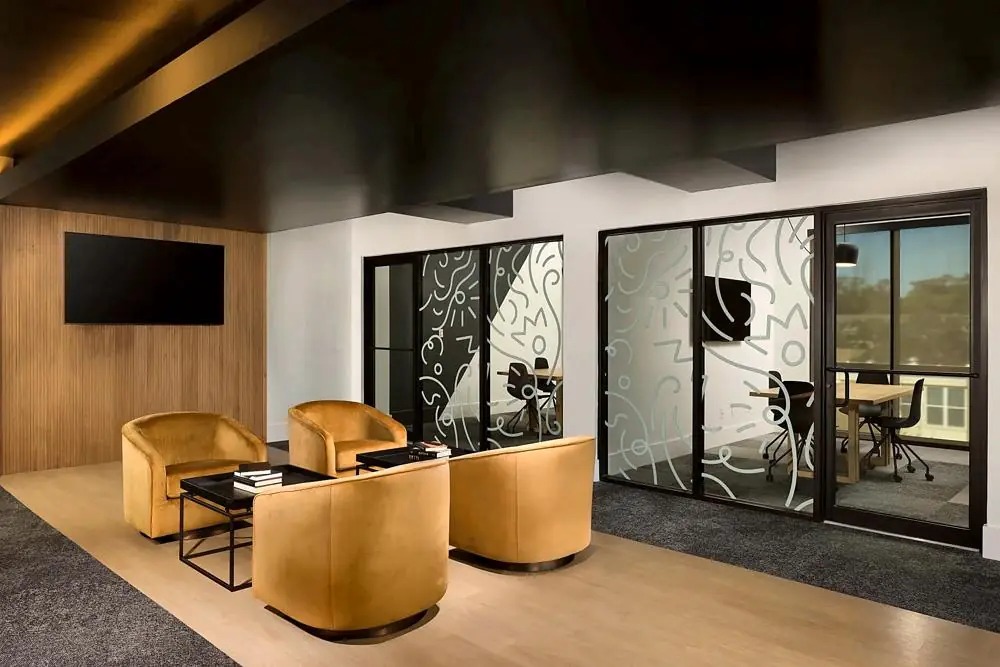
Many apartment communities also have study space on site. At The Renegade, the Genius Lounge off the lobby has glass group study rooms and individual pods, with free printing, fast Wi-Fi, and late hours and coffee during finals. If you’re comparing student apartments with study rooms, the questions below help.
Which Study Spot Is Right for You?
It depends on the task and the night. A few patterns hold up:
Your desk at home often suits short sessions, late-night reviews and anything you can do with headphones on.
Your building’s study rooms often suit group projects, printing and an hour between classes.
A campus library often suits long sessions, finals week and nights when the apartment won’t quiet down.
A private studio often suits you if roommate noise is a constant problem, because quiet hours are entirely yours.
Questions to Ask About Study Space Before You Sign
Use the same questions at every property:
Are there study rooms, and can residents reserve them?
Are there group rooms as well as individual study spaces?
How late are study spaces open, and do hours change during finals?
Is printing available, and is it free?
How fast is the Wi-Fi in study areas and in the apartments?
Does the community have quiet hours?
How long is the walk to Strozier or your main classes?
Frequently asked questions
How can I focus on studying at home?
Use one dedicated study spot, set a start and end time, and keep your phone in another room. Studying at home works best when it feels separate from relaxing.
Is it bad to study in bed?
It isn’t harmful, but it makes focus harder for most people. Lying down makes you sleepier, and a desk keeps work and sleep separate.
What are FSU library hours?
During the fall and spring semesters, Strozier Library is open 24 hours from noon Sunday to midnight Friday, plus 10 a.m. to 6 p.m. on Saturday. Hours change during breaks and finals, so check the FSU Libraries hours page.
Can any FSU student use the FSU medical library?
Yes, from 8 a.m. to 5 p.m. on weekdays. After-hours access to the Maguire Medical Library is limited to students in the medical, physician assistant, Bridge and some biomedical sciences programs.
Does white noise help you study?
It can, especially when voices carry through walls. White noise masks irregular sounds, which tend to be the most distracting kind.
How long should you study without a break?
Many students work well in 25- to 50-minute blocks with 5- to 10-minute breaks. Try a few lengths and keep the one where your focus holds.
Is it better to study with music?
Music without lyrics works for many students, especially for problem sets. For reading and writing, instrumental music, white noise or silence usually works better.
Where can I study near FSU late at night?
Strozier Library is open around the clock from Sunday afternoon to Friday midnight during the semester. Many apartment communities near campus also have study rooms, though hours vary.
Can I reserve a study room at Strozier Library?
Yes, through the FSU Libraries website. Book early in the last few weeks of the semester, when demand peaks.
Is a private studio better for studying?
It can be, if roommate noise is your main obstacle. You get your own space and set your own quiet hours. Our studios page has the details.